What I Wish Every Traveler Knew Before the Golden Circle
An Icelandic guide's honest list of Golden Circle surprises: weather swings, hidden costs, crowd timing, and the packing choices first-timers get wrong.
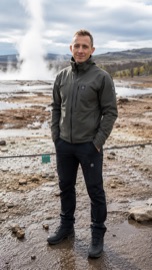 By Björn Einarsson, Iceland Golden Circle tour guide and local specialist
Strokkur gives you no warning. The pool swells, turns glassy blue for half a second, then throws a column of near-boiling water into the sky, and almost every group I walk onto that gravel path misses the first eruption because they are still deciding where to stand. Wait five minutes. It goes again. Most of what people get wrong about this route works the same way: nothing dramatic, just unannounced.
I have been guiding in Iceland since 2020 and working the Golden Circle since 2022, somewhere past a thousand travelers now. The questions barely change from group to group. So here is the honest list, the things I watch first-timers learn the hard way between Þingvellir and Gullfoss, written down so you can learn them the easy way instead.
Booking choice: Read the pickup instructions, budget separately for food, and keep the day length realistic. The spa combination takes substantially longer than the main-trio coach tour. Explore Classic Golden Circle
What surprises people most on their first loop?
The scale, not the scenery. The whole loop is about 300 km and drivable in under four hours, yet a good day out here runs 6.5 to 11 hours. First-timers expect long drives between distant wonders and instead get short hops, packed car parks, and a day shaped entirely by timing.
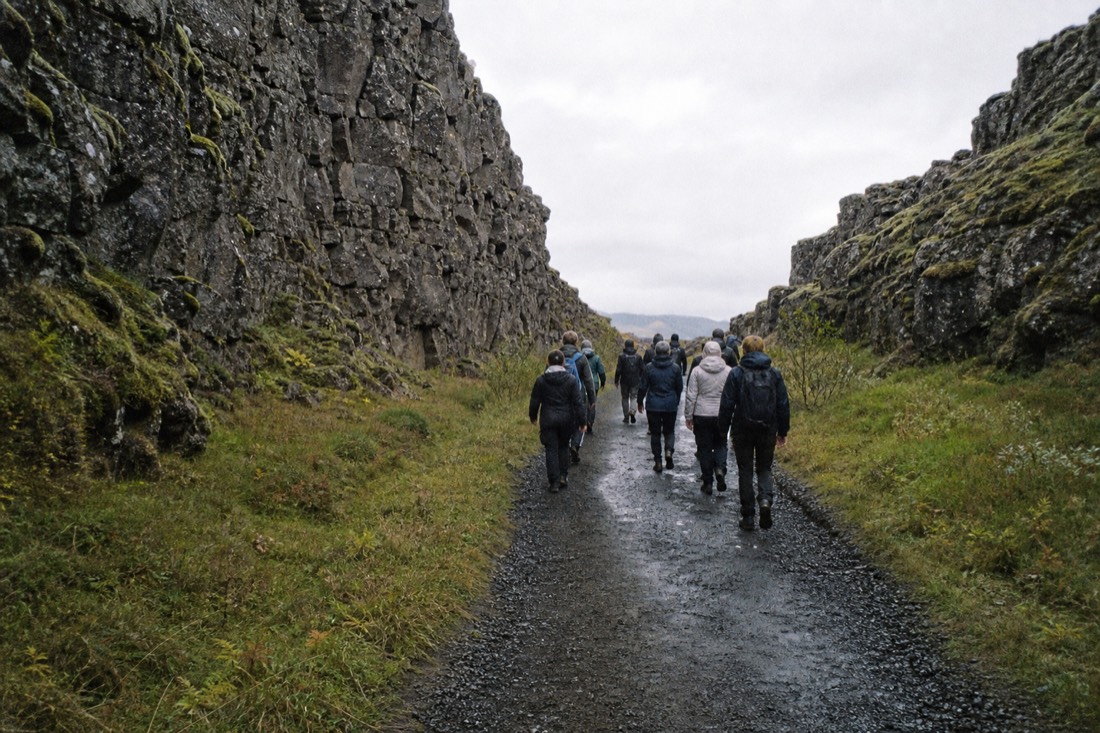
The route is a loop of roughly 300 kilometers that you could drive nonstop in under four hours. Nobody does. Organized days run anywhere from six and a half hours to eleven because the stops swallow the time, not the road. Þingvellir alone deserves a full hour: you walk a gravel path through Almannagjá, a literal crack between the North American and Eurasian plates, on ground where Icelanders founded their parliament in the year 930. Entry is free, though drivers pay 1,000 ISK to park.
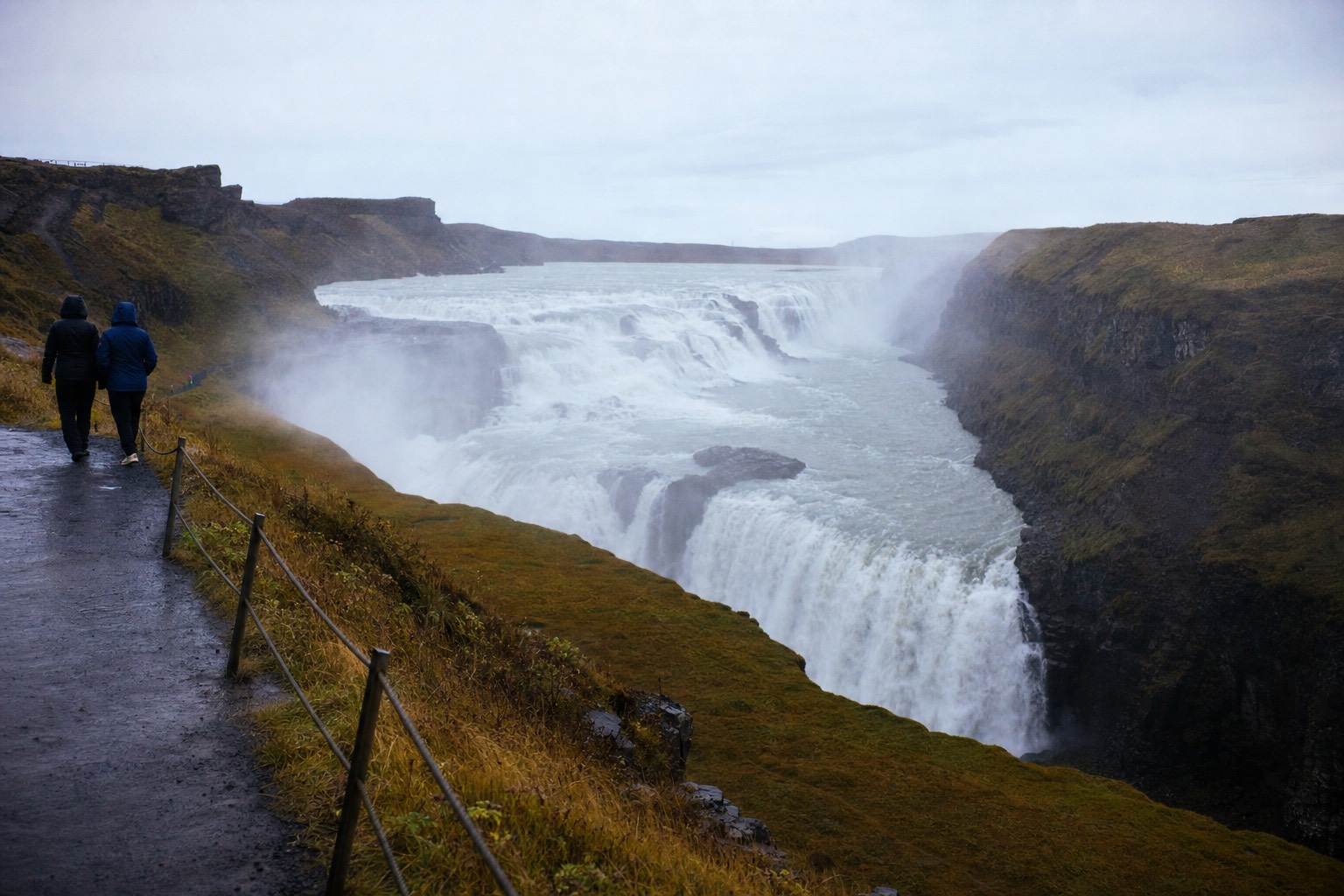
What else catches people off guard? The geothermal field at Geysir smells like eggs and nobody warns them. Strokkur erupts every five to ten minutes, so a missed photo costs you nothing but patience. Gullfoss is loud enough that you feel it in your chest before you see it, a 32 meter double cascade pouring into a canyon that stays half hidden until you are almost on top of it.
The biggest surprise, though, is the rhythm of the crowds. They move in a pattern so steady I can nearly set my watch by it, and that pattern matters more than any single fact in this article. More on that below.
What does the weather actually do to your day?
Wind runs the day, not rain. Weather rarely cancels the loop, but it reorders it: spray at Gullfoss soaks you sideways, the Þingvellir rift funnels gusts, and in winter ice closes the lower waterfall path. Check the forecast the morning you go, then dress for two seasons anyway.
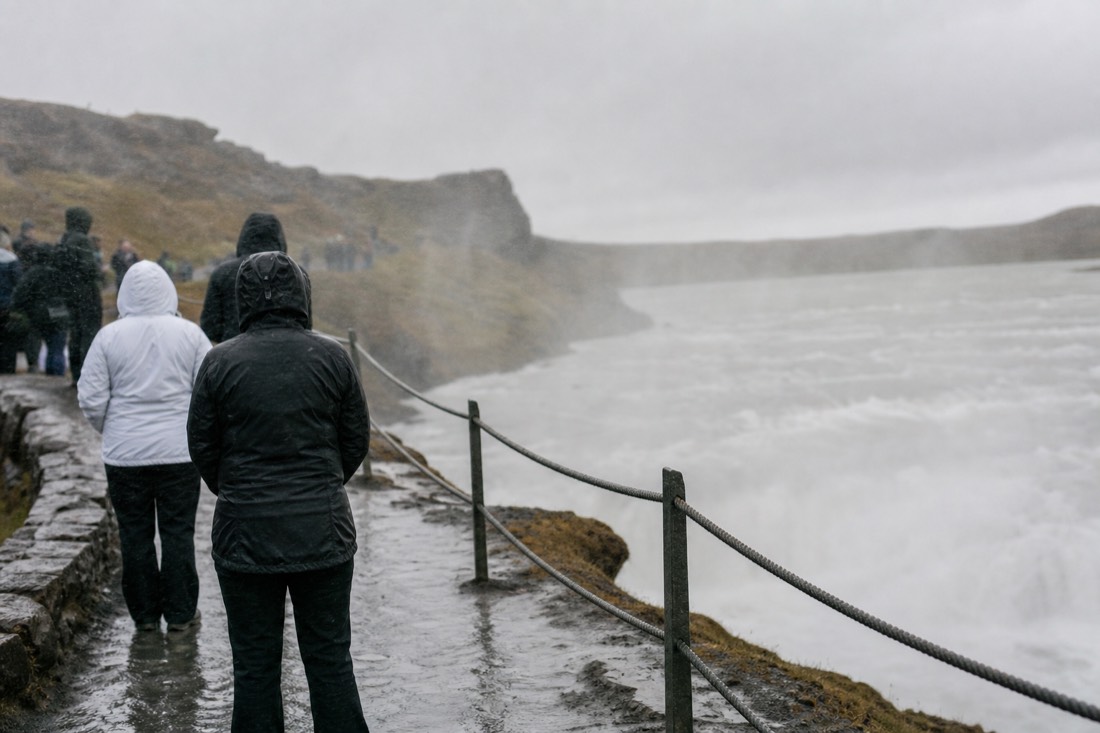
I check vedur.is with my morning coffee and I still get surprised by lunchtime. An Icelandic forecast is a mood, not a contract. What actually shapes the day is wind. Rain you can dress out of. Wind at an open viewpoint like the Gullfoss platform drives the waterfall's spray sideways into the crowd, and a ten minute stop in it will find every gap in a cheap jacket. The rift at Þingvellir works like a funnel on gusty days, which is a strange thing to feel while standing between two continents.
Summer wind is an annoyance. Winter wind changes plans: the lower path at Gullfoss closes when ice makes it unsafe, so you watch from the upper platform instead, and drivers should check road.is before committing to anything. None of this ruins the day. Groups loop the route through sleet all the time, and some of my favorite light arrives ten minutes after weather that had everyone hiding in the bus.
If you are coming between November and March, read about what the route looks like in winter before choosing between driving yourself and being driven. On a bad day that one choice does more for your nerves than anything you pack.
What do people wish they had packed?
A windproof shell, a warm mid-layer even in July, and shoes with real grip cover most regrets. Add a swimsuit and towel if your day ends in a lagoon, sunglasses for low sun, and a refillable bottle. Leave the umbrella: I have watched the wind eat several.
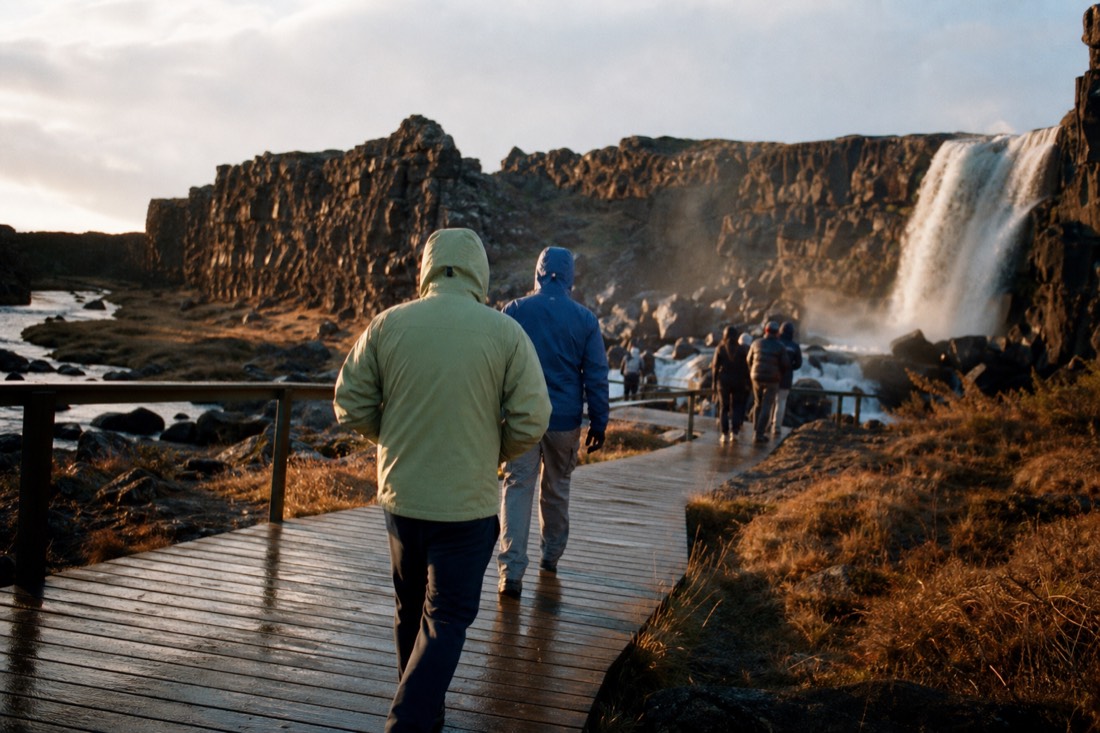
Icelanders own good shells, not good umbrellas. Here is the short matrix I wish was stapled to every booking confirmation:
| What to pack | Summer | Winter | Why it earns its place |
|---|---|---|---|
| Windproof rain shell | Yes | Yes | Gullfoss spray and sideways rain reach every open viewpoint |
| Warm mid-layer, fleece or wool | Yes | Yes | The wind cuts even on bright July afternoons |
| Shoes with grip | Trail shoes | Insulated boots | Wet boardwalks at Geysir, icy steps at Gullfoss |
| Swimsuit and towel | If a lagoon is in the plan | Same | Warm water stops are the best part of a cold day |
| Sunglasses | Yes | Yes | The Arctic sun sits low and lives in your eyes on the drive |
| Refillable bottle | Yes | Yes | Icelandic tap water is excellent and free at every stop |
| A payment card | Yes | Yes | Car parks and kiosks all take cards, cash is nearly pointless |
The lagoon line matters more than people expect. Blue Lagoon entry is pre-booked and starts at $95, and if a soak is part of your day, the simplest trick I know is wearing the swimsuit under your clothes so you spend your lagoon time in the water instead of a changing queue. In winter, add a hat and gloves you do not mind getting damp, because the walk from a warm bus to a frozen viewpoint happens six or seven times a day.
And the umbrella point is not a joke. I have seen three die at Gullfoss alone, inverted, snapped, and one sailing toward the canyon like a lost kite. The wind always wins. Buy a hood you trust instead.
Where does the day quietly cost more than expected?
The sights are mostly free, but the small charges stack. Parking at Þingvellir and Geysir now runs 1,000 ISK per car, Kerið charges 700 ISK, a farm buffet lunch sits around 3,290 ISK, and Blue Lagoon entry starts at $95. Plan for the quiet extras, not the tickets.
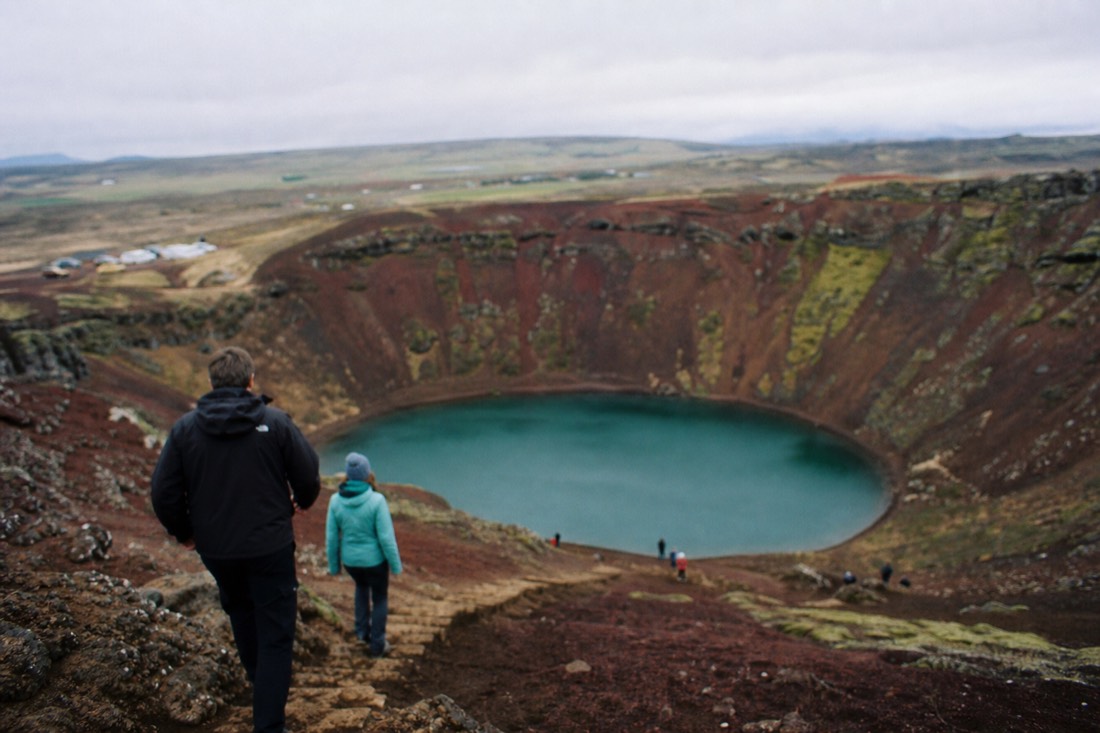
Nobody budgets for the Golden Circle wrong on the big line. They budget wrong on the drips. The waterfalls and the geysers cost nothing to look at, which lulls people into thinking the day is free, and then the card comes out five separate times:
| Quiet extra | What it costs | Who actually pays it |
|---|---|---|
| Þingvellir parking | 1,000 ISK per car | Self-drivers; tour passengers skip it |
| Geysir parking | 1,000 ISK per car, new for 2026 | Self-drivers again |
| Kerið crater entry | 700 ISK | Anyone whose tour does not include it |
| Farm buffet lunch | About 3,290 ISK per person | Everyone who gets hungry, so everyone |
| Blue Lagoon entry | From $95, pre-booked | Anyone adding the lagoon separately |
Two things soften the sting. First, on an organized day the parking fees disappear into the seat price, and two of the three tours I point people toward fold Kerið admission in as well. Second, food is the biggest swing item and the easiest to control: a fuel station hot dog and a farm buffet bracket the range, and both are honest meals. What actually stings is discovering the fees one by one with a queue behind you.
If you want the full arithmetic, seat prices against self-drive fuel and parking, I broke it down in the cost guide. The short version: the route is cheap to see and moderately priced to do well.
When should you go to dodge the coach wave?
Before ten or after six. Most day departures leave Reykjavík between 08:00 and 10:00, the wave lands mid-morning, and the big three stops stay busy from 10:00 until about 18:00 in summer. Gullfoss alone sees more than 2,000 visitors a day in high season.
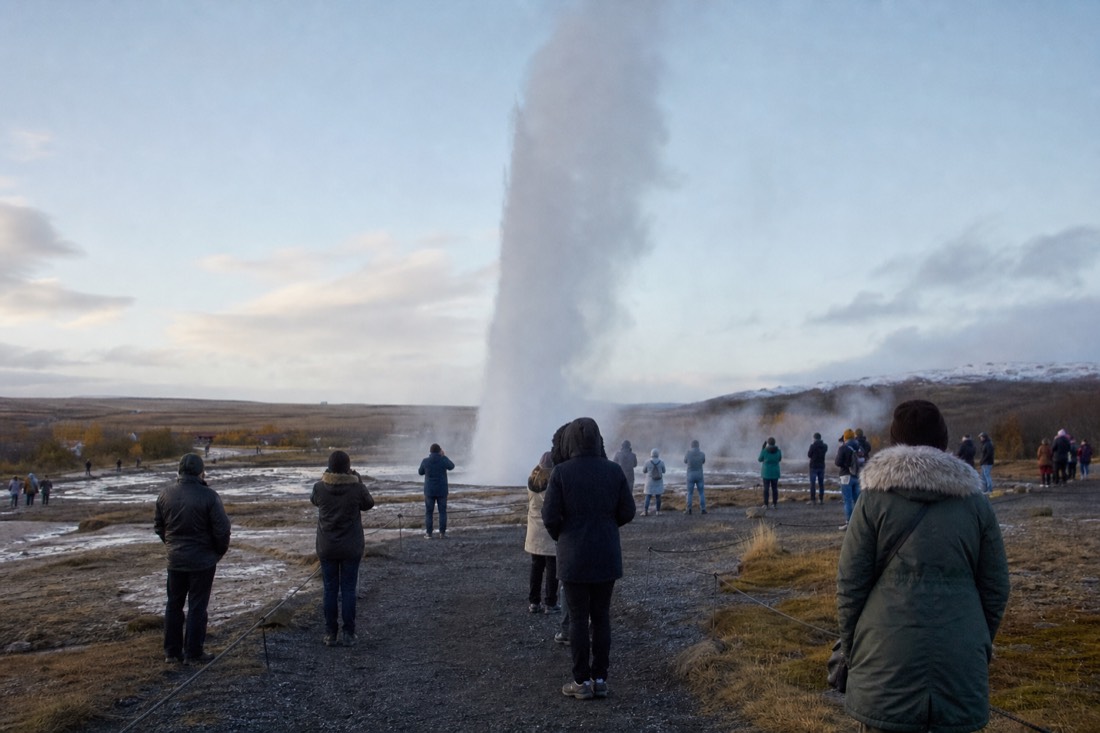
The crowd is not random. It is a tide, and it runs on the departure boards in Reykjavík. Buses leave the city between eight and ten, take about an hour to reach the first stop, and from there the wave rolls around the loop all day. Stand at Þingvellir at 09:00 and you share the rift with a handful of self-drivers. Stand there at 11:30 and you queue for the viewpoint.
| Time of day | What the route feels like |
|---|---|
| 06:00 to 08:00 | Car parks near empty, photographers and early self-drivers only |
| 08:00 to 10:00 | Departures rolling out of Reykjavík, first stops still calm |
| 10:00 to 13:00 | The wave lands, viewpoints and cafés fill fast |
| 13:00 to 16:00 | The busiest stretch at all three headline stops |
| 16:00 to 18:00 | Still busy, thinning stop by stop |
| 18:00 onward | Coaches gone, long summer light, the route breathes out |
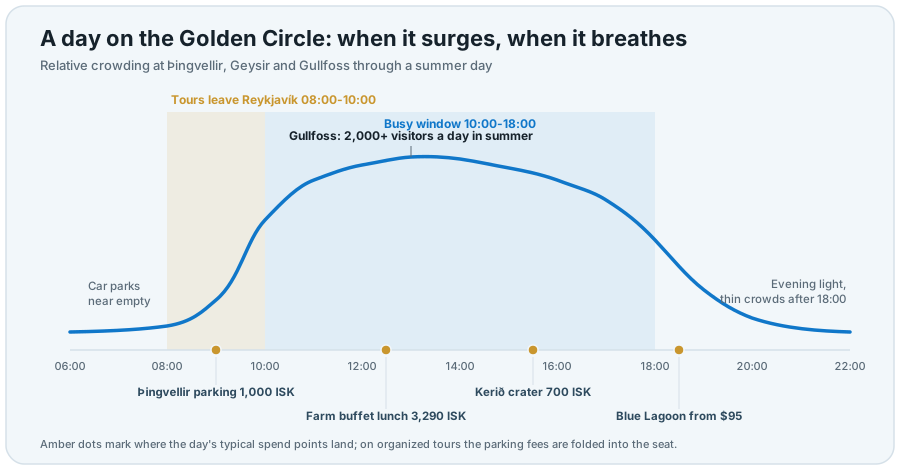
You have three honest options. Beat the wave with an early self-drive start. Let it pass and run the loop into the long summer evening, my personal favorite, since the light gets better as the car parks empty. Or accept the wave and buy your way around its worst effects with a small group that paces stops differently than the hundred-seat coaches. All three work. Standing at Gullfoss at 13:30 wondering where everyone came from is the only plan that fails.
What would a local do differently?
Slow down and choose by fit, not price. A local would run the loop late, eat at a farm instead of a fuel station, skip nothing for the sake of pace, and pick a small group over a big coach when the budget allows. The cheapest seat is rarely the best value.
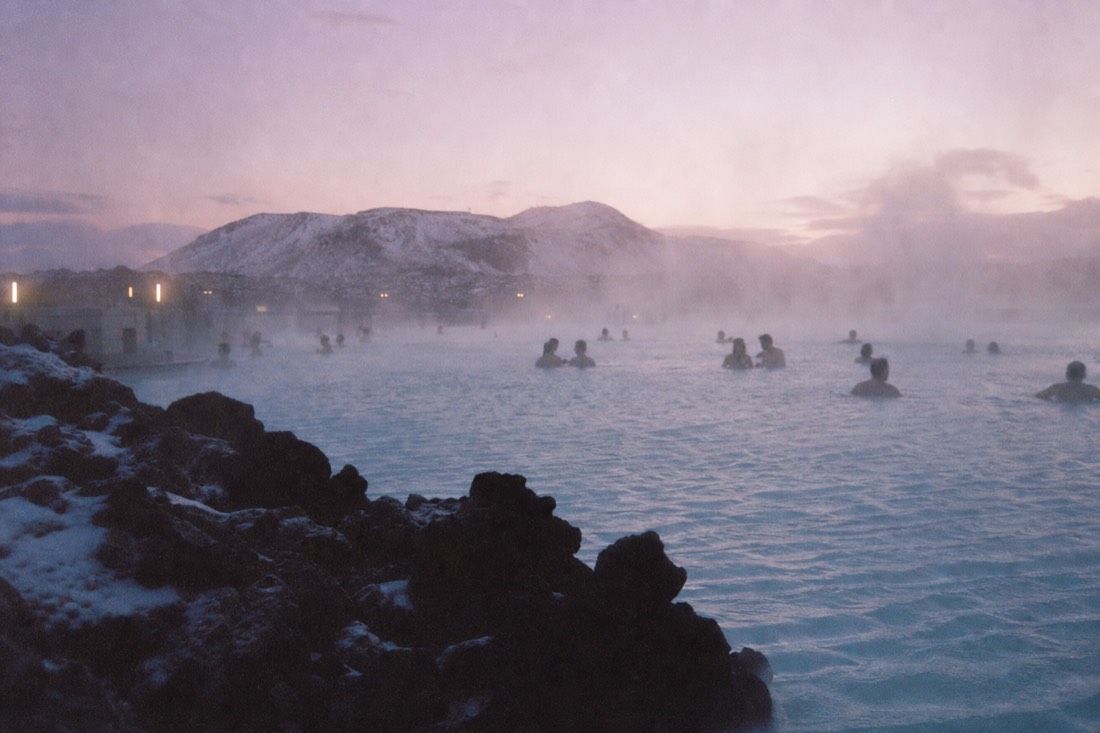
Locals treat the loop as a lazy day out, not a checklist. They leave late, linger where the light is good, and they eat properly: a greenhouse lunch among growing tomato plants beats a sandwich in a moving bus every single time, and I wrote up where to eat along the route for exactly that reason.
The other local instinct is picking depth over price. A big coach is the cheapest way around and it does the job. But when travelers ask me what I would actually book for a first visit, I point at the long small-group day: maximum 19 people, Kerið included, and the loop ending with a two hour soak at the Blue Lagoon with admission already in the price, which solves the pre-booking problem for you. That is the shape of day a local would build by hand. I do not drive for that operator, so take this as a guide's read of the itinerary rather than a sales pitch: book the Small-Group Blue Lagoon combo and check live availability and prices on Viator. It carries a 4.9 rating across 6,241 reviews and cancels free up to 24 hours out, so holding a date costs you nothing while you finish planning.
One more local move: end the day tired. If you get back to Reykjavík with energy to spare, you rushed something worth lingering over.
What else do people ask before they go?
Do I need Icelandic cash?
No. Cards work at every car park machine, café, and kiosk on the route, and contactless payment is the default everywhere. I carry no cash on working days and have never once needed it between Reykjavík and Gullfoss.
Can you swim anywhere at Geysir?
No, and please do not test this. The water in the geothermal field runs between 80 and 100°C, hot enough to scald in seconds, and the roped paths exist because the crust between them can be thin. Save the swimming for the Blue Lagoon or another proper warm pool at the end of the day.
How long should I plan for the whole day?
Organized days run from about 6.5 hours for the direct version up to 11 hours with Kerið and the Blue Lagoon added. The bare drive is 3.5 to 4 hours without stopping, but nobody sane does it that way. Give the loop a real day and it gives one back.
Whatever shape your day takes, the route rewards the same three habits: watch the wind, mind the clock, and leave room to stand still. Strokkur will erupt whether you are ready or not. The trick is simply being there, warm and unhurried, when it does.
Check your date before arranging the rest of your trip
General recommendation — confirm your party, pickup and requirements on the booking page.
Classic Golden Circle
The three main sights with an English-speaking guide and coach transport.
6½ hours · English · Meals extra. Select BSÍ or an offered pickup point; central hotels often use bus stops.
Scheduled dates from Viator. Availability and final price are confirmed on Viator.
Affiliate links: we may earn a commission at no extra cost to you. Product details checked 16 September 2026.