Can You Swim at Geysir? Water Heat and Safety Rules
The pools at Geysir look like spa water and behave like a stovetop. A working guide explains the temperatures, the ropes, and where this route actually lets you get in.
 Written with Björn Einarsson, Iceland Golden Circle tour guide and local specialist
Short answer
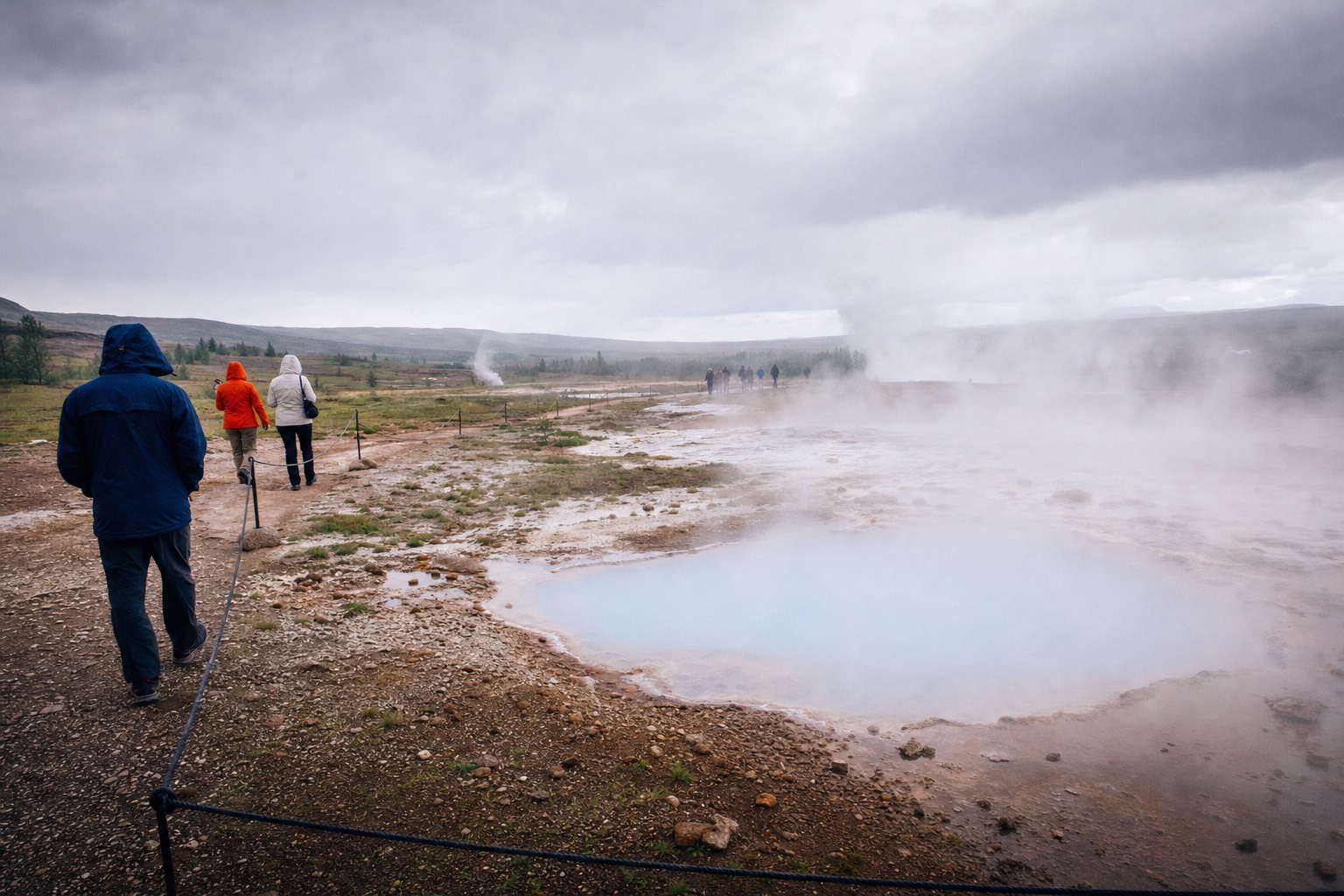
No. Every pool at Geysir runs 80 to 100°C, at or near boiling, and the whole field sits behind mandatory roped paths. You look, you photograph, you keep your hands dry. The soaking on this route happens elsewhere. The Blue Lagoon and the Secret Lagoon are the warm pools built for people.
Steam finds you before the parking lot does. Hydrogen sulfide, warm and eggy, drifting across the Haukadalur valley while the ground mutters under the gravel. Then someone up ahead shouts, Strokkur throws a column of boiling water into the grey sky, and half the crowd screams and laughs at once. Within the first five minutes on that field, almost every group I walk asks me the same question: can we get in?
I get the instinct. The pools glow a milky mineral blue that looks lifted from a spa brochure, the air is cold, and Iceland has spent twenty years selling itself as the country where you bathe outdoors in a snowstorm. But Geysir is the one stop on the Golden Circle where that instinct can put you in a hospital. Here is the full, honest answer.
Booking choice: Geysir is for watching, not swimming. For a soak, choose Secret Lagoon entry if driving yourself, or a tour that includes a separate bathing pool. Explore Secret Lagoon admission
Can you swim in the Geysir hot springs?
No, never, not anywhere on the field. Every pool and vent in the Geysir geothermal area holds water between 80 and 100°C, hot enough to scald on contact, and the whole site is laced with roped paths you are required to stay inside. There is no swimming area, no cooler pool, no exception.
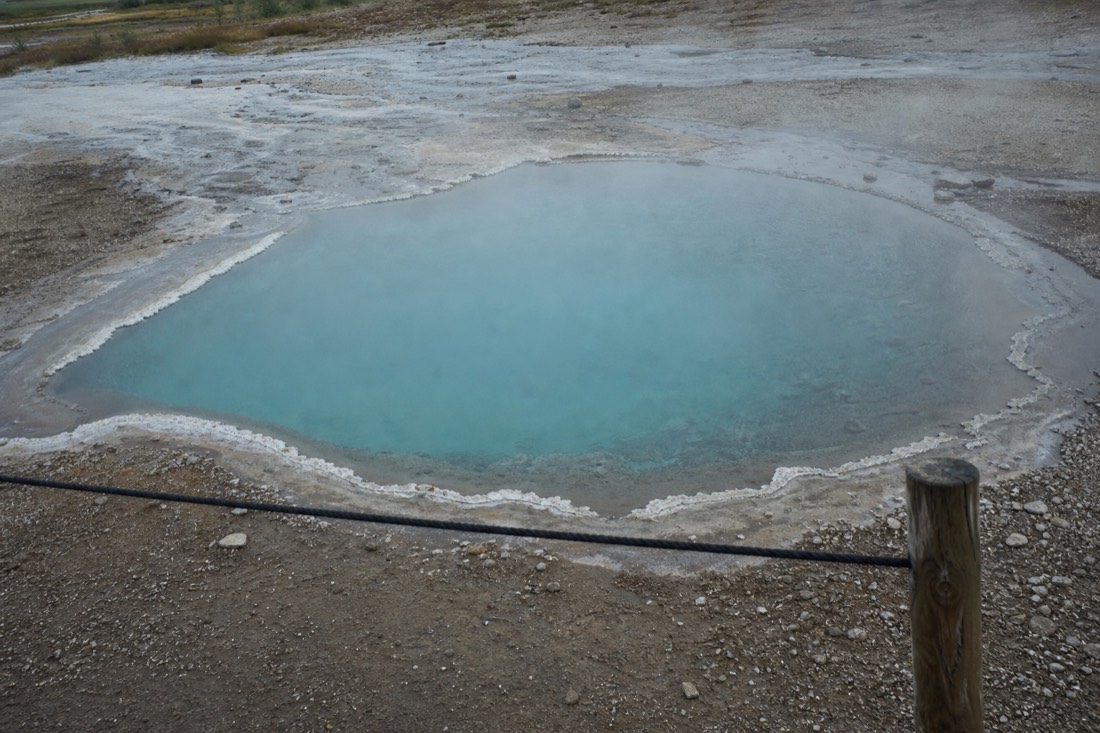
The confusion is understandable, and I never mock anyone for asking. Iceland's whole image is built on warm water. People land at Keflavík, soak in a lagoon by day two, then arrive at Geysir on day three and see the same milky blue. Blesi, the twin pool near the top of the slope, is the worst offender: one half a deep, still, impossible turquoise that photographs like bathwater. It sits near boiling.
What makes Geysir different from every pool you have soaked in is that nothing here is managed for bathing. There is no gate, no ticket, no lifeguard, and entry is free. The field is a raw piece of geothermal ground with ropes strung through it, and those ropes are the entire safety system. Even the little runoff streams threading through the pale gravel, the ones that look like puddle-depth trickles, carry scalding water away from the springs.
Geysir is usually the second stop of the day when you run the classic loop, and I break down where it falls in the full stop order of the route in a separate guide. For this stop, the rule fits in one line. Eyes and cameras get everything. Skin gets nothing.
How hot is the water at Geysir really?
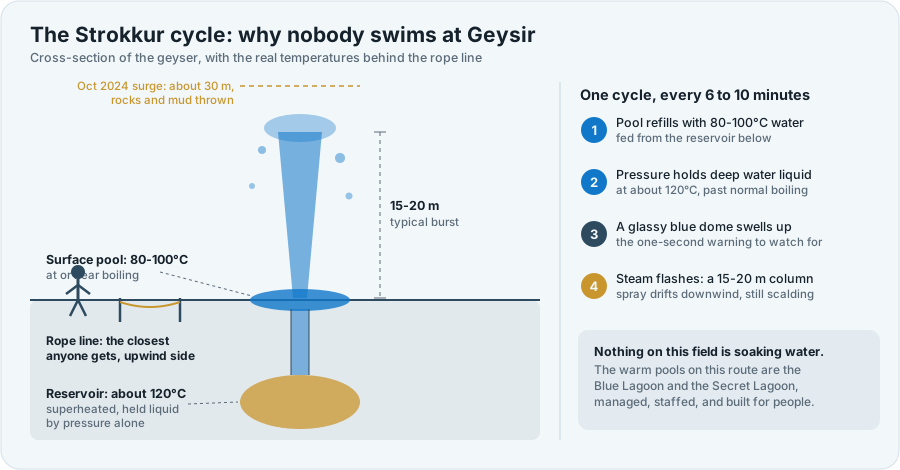
Between 80 and 100°C at the surface, which is at or near a rolling boil. The plumbing below is worse: the reservoir that feeds Strokkur runs to about 120°C, kept liquid by pressure. A bath you could actually sit in is less than half as hot as the coolest pool on this field.
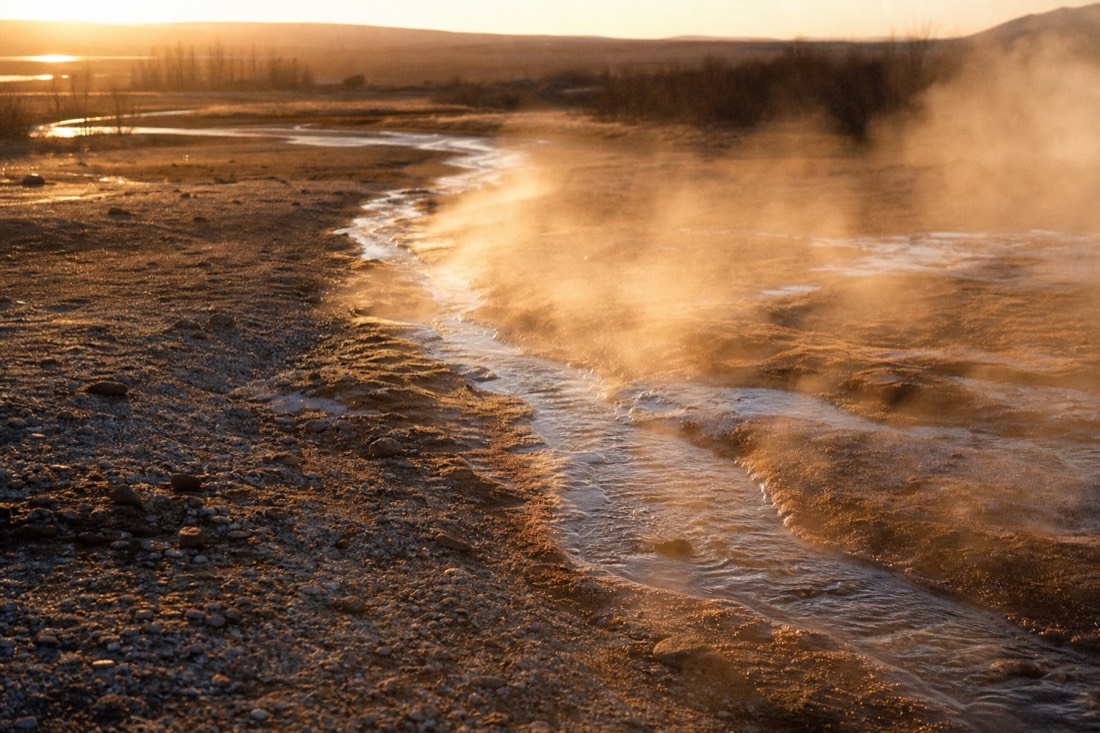
Those numbers deserve a moment, because "hot spring" is doing heavy lifting in most people's heads. A hot tub sits around body-and-a-bit temperature. The springs at Geysir sit at the temperature you cook pasta at.
| Water at Geysir | Temperature | Reality check |
|---|---|---|
| Surface pools and vents | 80 to 100°C | At or near boiling, scalds skin on contact |
| Strokkur's underground reservoir | About 120°C | Superheated, held liquid only by pressure |
| Runoff channels beside the paths | Still steaming | Not a warm stream, treat as scalding |
The 120°C figure is the strange one, since water is not supposed to exist as liquid past 100. Underground it can, because the weight of the water column above raises the boiling point, the same trick a pressure cooker uses. Measurements of the Strokkur system put the reservoir at roughly that mark just before each eruption, which is exactly why the bursts are so violent when the pressure finally lets go.
One more thing I tell every group: the clearest, bluest pools are the hottest ones. Cooler water grows algae and looks green or brown around the edges. Water near boiling stays sterile and gin-clear over white silica. At Geysir, inviting is a warning sign.
What are the safety rules on the geothermal field?
Stay inside the roped paths, keep your hands out of every pool and stream, hold on to your children, and never step onto bare ground between springs. The crust off the path can be a thin lid over boiling water, and the ropes are placed around hazards you cannot judge by eye.
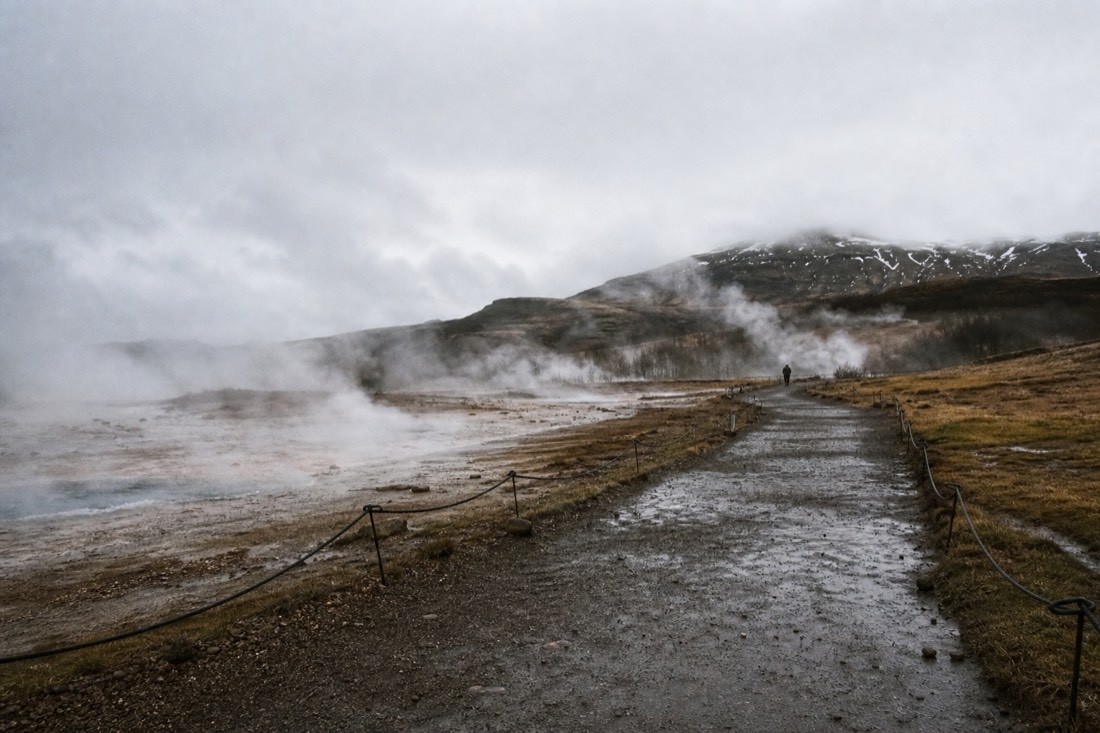
The rules are short because they have to survive being read by tired people in wind. Stay on the marked paths. Do not touch any water, including runoff. Do not throw anything into the springs. Keep children within arm's reach, not just within sight. That is the whole list, and every incident I have heard of on this field broke one of those lines.
What the ropes protect you from is not always the visible pool. Geothermal ground builds sinter, a mineral crust that can look like solid pale rock while being a centimeter-thick shell over water near boiling. From above, sound crust and hollow crust look identical. The people who maintain the field know where the ground has been probed and where it has not, and the ropes trace that knowledge. Stepping over one is not bending a rule, it is volunteering to test unprobed crust.
Two seasonal notes. In winter the paths themselves get slick with ice from freezing spray, so this stop asks more of your boots than Gullfoss does; my winter guide to the route covers footwear and daylight timing. And in any season, check safetravel.is, Iceland's official safety service, before you go. Ten minutes there beats learning geothermal etiquette by accident.
How often does Strokkur erupt and how close can you stand?
Strokkur erupts every 6 to 10 minutes, and most bursts reach 15 to 20 meters. You can stand at the rope line itself, close enough to hear the water collapse back into the vent. Pick the upwind side: downwind, the spray drifts across the crowd, and it comes down hot.
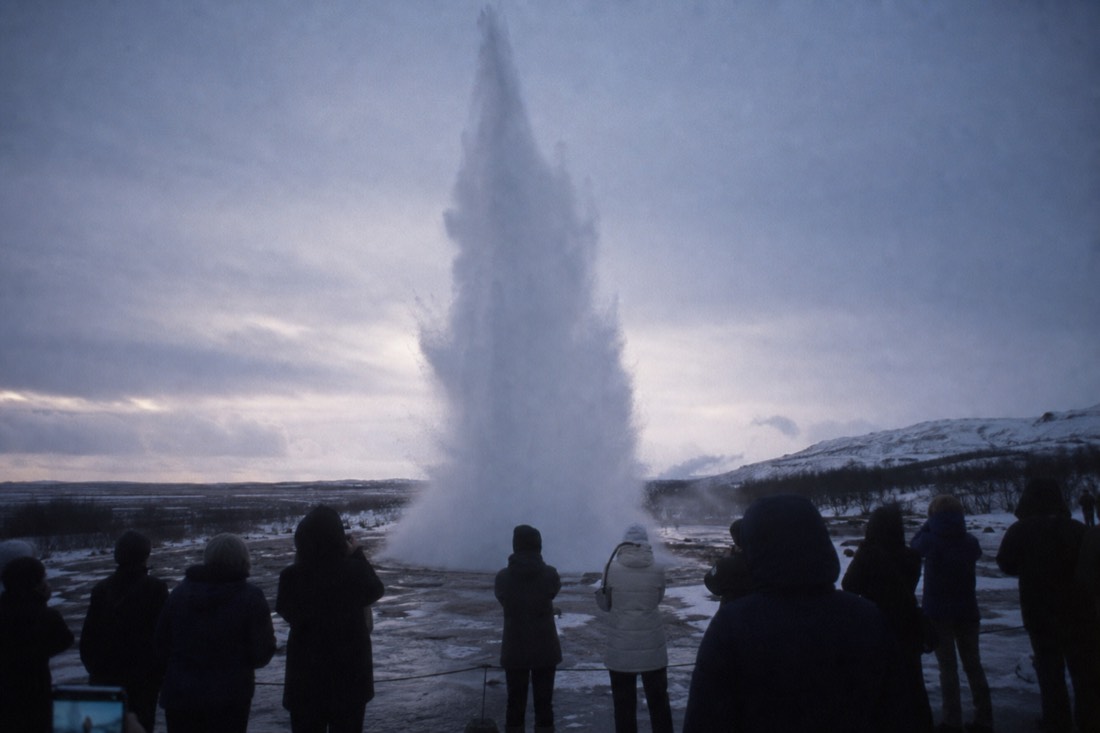
Strokkur is the most reliable big geyser most travelers will ever meet, which is the quiet luxury of this stop. You do not wait hours as you might elsewhere. You wait minutes, and the field gives you a tell: just before the burst, the pool bulges into a glassy blue dome for about a second. Watch for the dome and you will catch the whole column instead of the top of it.
| Strokkur, measured | Figure |
|---|---|
| Typical eruption interval | Every 6 to 10 minutes |
| Typical column height | 15 to 20 meters |
| October 2024 activity surge | Bursts near 30 meters, rocks and mud thrown |
| Entry fee to watch | None, the field is free |
The autumn 2024 surge is worth knowing about as context rather than alarm. For a stretch, the geyser fired higher and more often than normal and occasionally tossed debris. Fields like this breathe, which is another reason the ropes sit where they sit and why you respect them even on a calm day.
Every tour on this site gives you enough time for multiple eruptions, with margin to walk the slope past Blesi and the old Great Geysir vent.
| Tour | Time at Geysir | Eruptions you can expect |
|---|---|---|
| Blue Lagoon and Kerið combo, small group | 1 h 20 min | Roughly 8 to 13 |
| Classic day tour, coach | About 1 hour | Roughly 6 to 10 |
| Tomato farm and Kerið, small group | 45 minutes | Roughly 4 to 7 |
Where can you actually soak on this route?
The Blue Lagoon and the Secret Lagoon are the bathing stops within reach of this route. Both are managed pools with staff, changing rooms, and water kept at human temperatures. Nothing at Geysir, Gullfoss, Þingvellir, or Kerið is for swimming; the only warm water you should enter comes with a ticket.
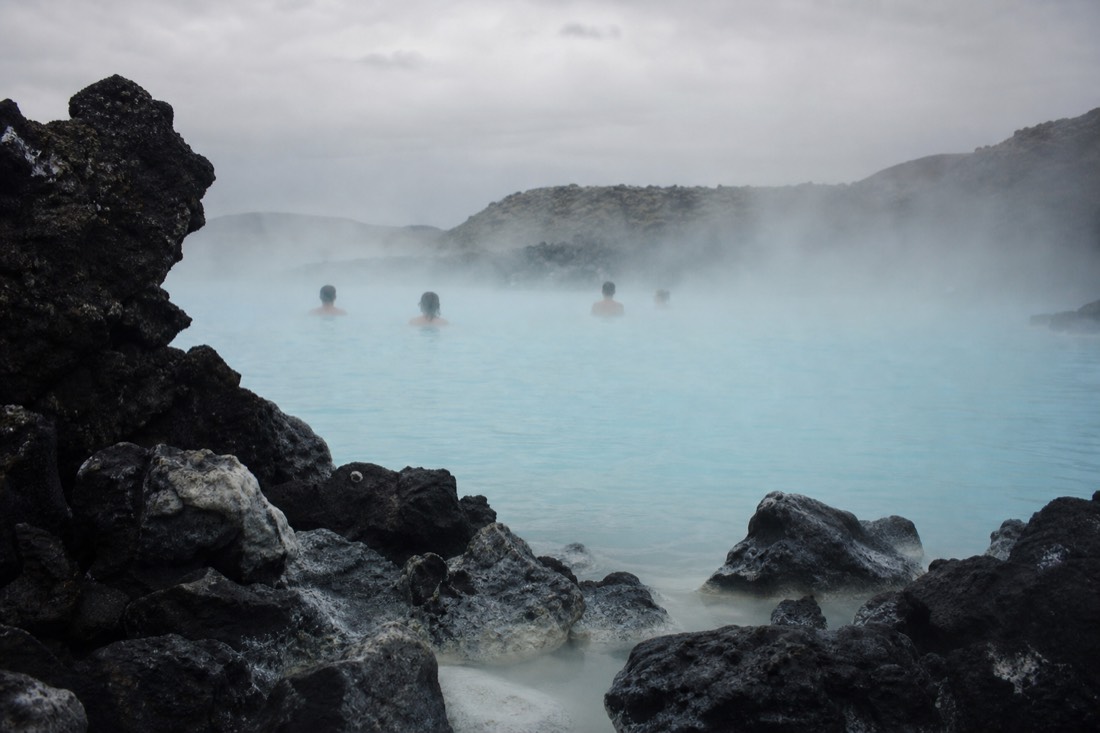
This is the part I wish more people knew before their day on the loop, because the fix for the Geysir temptation is simply to build a real soak into the same day. The Blue Lagoon is the polished option: silica-blue water like the pools at Geysir, minus the boiling. It requires pre-booking, with tickets from $95 on the official site, and it sells out on busy dates. If a soak is the point of your day, book the Small-Group Blue Lagoon combo and check live availability and prices on Viator: it runs the full loop with 1 h 20 at Geysir, then ends with two hours in the lagoon, admission already included, so the booking problem is handled for you.
The Secret Lagoon at Flúðir, a short detour off Route 35, is the older, quieter answer: a warm village pool from the nineteenth century with steam drifting off it. It is a separate ticket from any day tour, so if a real soak is what Geysir left you wanting, check price and dates here. Some itineraries add it in place of other stops, and I compare those trade-offs in the add-ons comparison.
| Stop | Can you get in? | The situation |
|---|---|---|
| Geysir geothermal field | No | 80 to 100°C behind mandatory ropes |
| Gullfoss | No | Glacial waterfall, viewing paths only |
| Þingvellir | No | Cold rift water, guided snorkeling only |
| Kerið crater lake | No | Cold lake below the 700 ISK viewpoint |
| Blue Lagoon | Yes | Pre-book from $95, or included on the combo |
| Secret Lagoon, Flúðir | Yes | Warm managed pool near Route 35 |
Has anyone been hurt at Geysir?
Yes. Icelandic news archives carry a steady file of geothermal burn cases: children badly burned at a geyser in 2015, a traveler hospitalized after stepping into a hidden vent, spectators caught by wind-blown scalding spray at Strokkur. Nearly every incident traces back to leaving the path or touching the water.
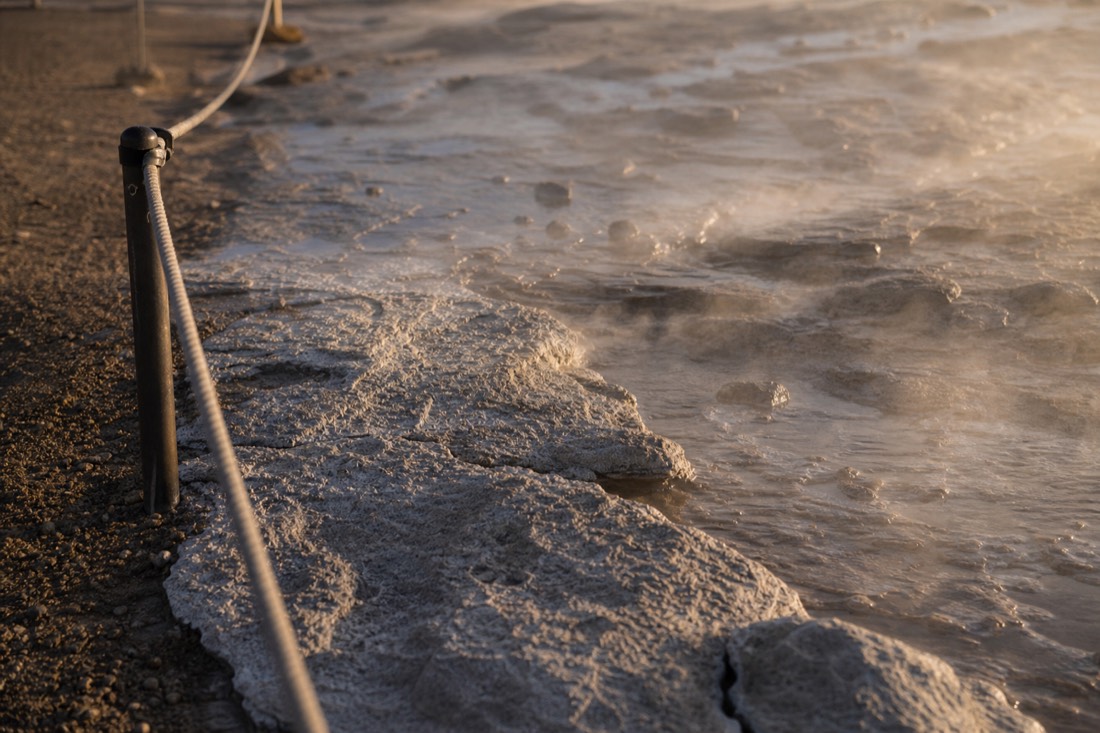
The injuries follow three patterns, and knowing them is more useful than a scare story. First, the hand test: someone dips fingers into a pool or runoff stream to check the temperature, and the check itself is the burn. Second, the shortcut: someone steps past a rope for a photo angle and the crust gives. Third, the wind shift: Strokkur's spray column drifts, and people standing tight on the downwind rope get rained on with water that left the vent at boiling.
None of this makes Geysir dangerous the way an unfenced cliff is dangerous. I walk the field with grandparents and toddlers most weeks of the year, and inside the ropes it is a gravel path with a spectacular view. The hazard lives entirely on the far side of the rope, which is precisely why the rope is there. Icelandic geothermal fields do not fence you out with walls; they trust you with a line of string and a sign.
If skin does meet hot water, get the burn under cool running water fast and keep it there, and for anything beyond a small red patch, call 112, Iceland's emergency number. Then tell the staff at the visitor center across the road. But the honest summary of decades of incidents is simpler: stay inside the ropes, keep your hands dry, and Geysir will only ever hurt your shower schedule.
Which warm-water soak should you add, Blue Lagoon, Secret Lagoon, or Fontana?
Add one of four. The Blue Lagoon, Secret Lagoon, and Laugarvatn Fontana are warm managed pools between 36 and 40°C, entered with a ticket. Silfra is the cold one, a 2 to 4°C drysuit snorkel between the plates. Geysir stays look-only, so your real soak is a separate, bookable stop.
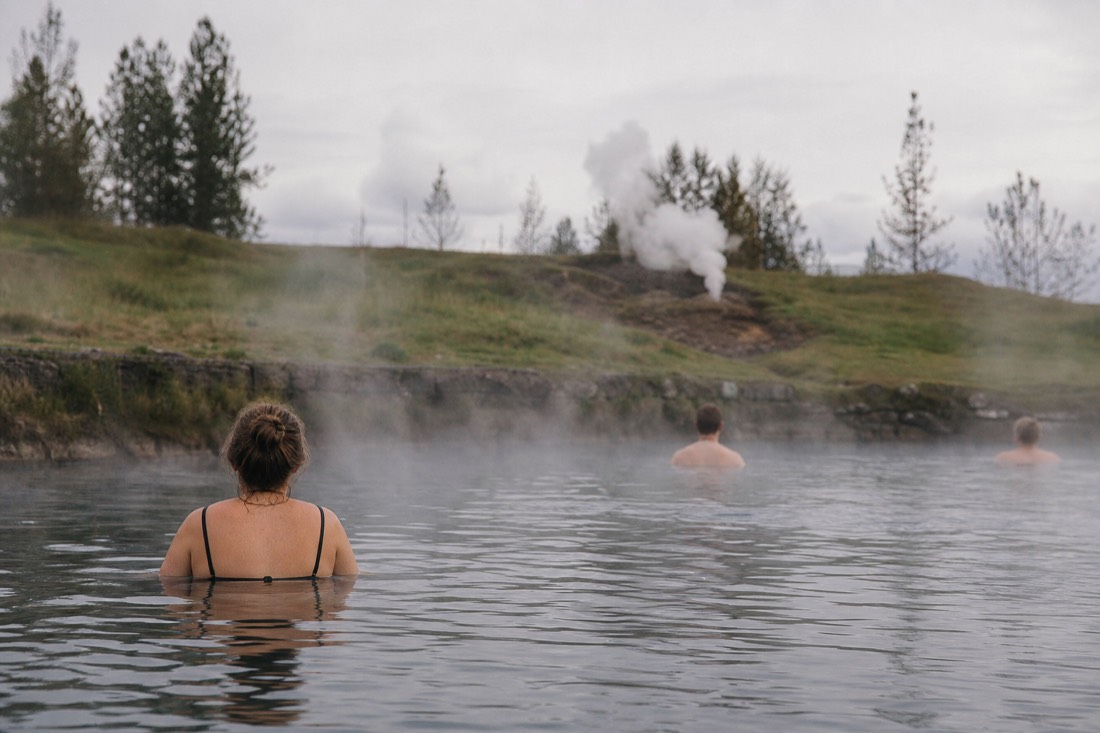
The question I get at the rope line is really two questions in a coat. People want to know why they cannot get in here, and underneath it, where they can. So here is the map of warm water within a short drive of the route, and what each one actually costs to enter.
The Blue Lagoon sits over on the Reykjanes peninsula, closer to the airport than to Geysir, and it is the polished choice: milky silica water held at 37 to 40°C, changing rooms, a bar in the pool. It needs a pre-booked slot and it sells out on busy dates, with tickets from $95 on the official site. If your day ends near Keflavík anyway, it lines up beautifully.
The Secret Lagoon at Flúðir is the one I send people to when they want the older, quieter Iceland. It is the country's oldest swimming pool, fed by hot springs that hold it at a steady 38 to 40°C year-round, with a small geyser puttering in the corner. Adult entry runs about 4,500 ISK. Laugarvatn Fontana, right on Route 37 at the lake, is the third warm option: a cluster of shallow baths between 36 and 40°C with steam rooms built over a natural vent, adult entry around 5,890 ISK.
Silfra is the odd one out, and I raise it because people confuse "getting in the water" with "getting warm." Silfra is a guided drysuit snorkel through glacial meltwater in the Þingvellir rift, and that water sits at 2 to 4°C all year. It starts from about 19,990 ISK and it is a genuine highlight, but it is the opposite of a soak. I lay out how these add-ons trade against each other in the add-ons comparison.
| Soak option | Water | Adult entry | Booking |
|---|---|---|---|
| Blue Lagoon, Reykjanes | Warm, 37 to 40°C | From $95 | Required, sells out |
| Secret Lagoon, Flúðir | Warm, 38 to 40°C | About 4,500 ISK | Advised in summer |
| Laugarvatn Fontana | Warm, 36 to 40°C | About 5,890 ISK | Advised in summer |
| Silfra snorkel, Þingvellir | Cold, 2 to 4°C, drysuit | From about 19,990 ISK | Required, guided |
What are the rules of a geothermal swim in Iceland?
Shower fully without a swimsuit before you enter, then wear one in the water. It is mandatory at every Icelandic pool and lagoon, a hygiene rule that keeps low-chlorine geothermal water clean. Tie long hair up, keep prescription glasses dry, and hold small children close. That is the whole code.
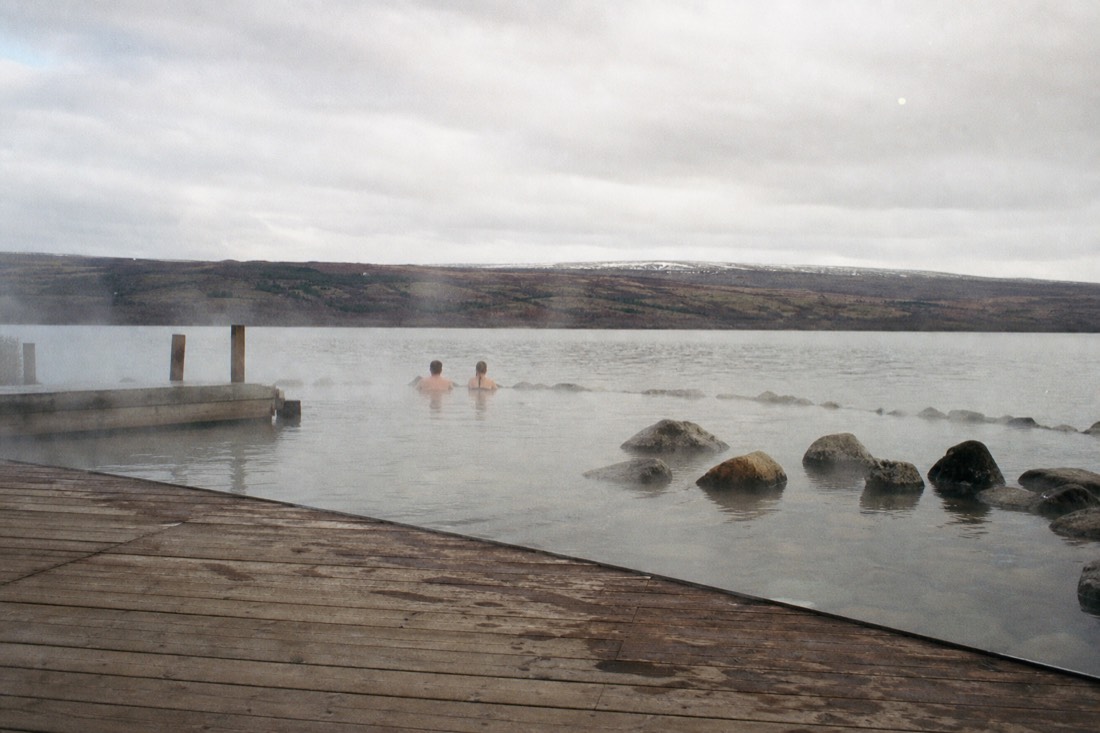
Once people accept that the warm water lives elsewhere, the next surprise waits in the changing room. Iceland runs its pools on very little chlorine, which is part of why the water feels so soft, and the trade for that is a bathing code every local learned as a child. Break it and you will get a firm word from an attendant, or from a grandmother, which is worse.
The core of it is the pre-swim shower. You wash your whole body without a swimsuit, at the marked spots the illustrated signs point to, before you go anywhere near the pool. Showers are separated by gender, and the big lagoons like the Blue Lagoon give you private cubicles if the communal setup rattles you. Then, and only then, you put your swimsuit on for the water itself. Bare in the shower, covered in the pool: that order trips up more visitors than any other single thing.
A few smaller rules save your day. At the Blue Lagoon the water is high in silica, which stiffens wet hair, so tie long hair up and use the free conditioner in the showers before you get in. Sunglasses are fine and even pleasant against the glare, but keep prescription glasses out of the water and leave contact lenses in your bag, since the minerals can cloud both. If you are bringing kids, know that the Blue Lagoon admits ages two and up, and children eight and under wear the free floaties handed out at the water's edge.
None of this is fussy for its own sake. It is the same logic as the ropes at Geysir: a small, shared discipline that keeps a natural resource usable for the next person. Learn it once and every pool in the country opens up to you.
| Rule | What it means in the water | Why it exists |
|---|---|---|
| Shower first, no swimsuit | Wash fully at the marked spots before entering | Low-chlorine water stays clean through bather hygiene |
| Swimsuit on for the pool | Bare in the shower, covered in the water | Standard at every managed pool and lagoon |
| Manage long hair | Tie it up, use the free conditioner first | Blue Lagoon silica stiffens wet hair |
| Mind glasses and lenses | Sunglasses fine, keep prescription glasses dry, skip contacts | Minerals cloud lenses and irritate contacts |
| Watch young children | Ages two and up, eight and under wear free floaties | The mineral load is strong for small bodies |
The Geysir safety slips Björn corrects on the field
After years on this route, the same five slips repeat: the finger dip to test the heat, one foot over the rope for a photo, standing downwind of Strokkur, a child drifting toward a pool, and treating a shallow stream as cool. I head off each one before it becomes a burn.
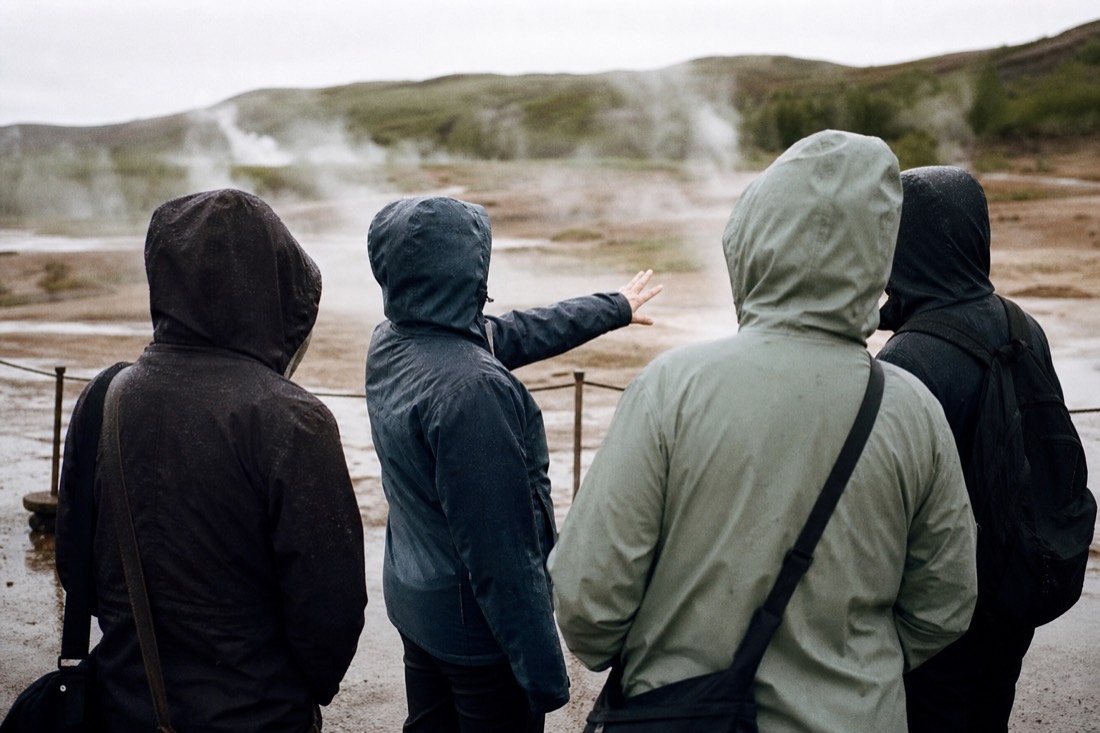
I have guided the Golden Circle since 2022, and by my own count I have walked more than a thousand travelers through Haukadalur. You start to see the mistakes before they happen. None of them come from carelessness, really. They come from instincts that serve people well at home and betray them on a geothermal field.
The finger dip is the most common. Someone crouches at a pool or a runoff channel to feel how hot it is, because that is how you check bathwater. Here the check is the injury, since the water sits at 80 to 100°C. I stop that one mid-crouch, every time. Close behind it is the photo step, one boot over the rope near Blesi or the old Great Geysir vent to line up a cleaner shot. The crust out there looks solid and is not: the ropes trace ground that has been probed, and the far side has not been.
The downwind slip is sneakier because it feels safe. People crowd the rope nearest the wind so they stand close to Strokkur, and when the column drifts their way the spray lands hot. I move groups to the upwind side before the burst. Then there are the two I never relax about: a small child wandering a step toward a pool while a parent frames a photo, and someone treating a shin-deep stream as if shallow meant cool. On this field, shallow water left a boiling spring a few meters back.
I am not the guide on the three tours this site books, so take this as what I watch for on the route rather than a script from any one trip. The pattern holds across seasons and groups. Respect the string, keep your hands to yourself, and Geysir gives you one of the great free shows in Iceland with nothing to regret.
| The slip I correct | Where I see it | What I tell people |
|---|---|---|
| The finger dip to test heat | Pool and runoff edges | The test is the burn, hands stay dry |
| One foot over the rope | Near Blesi and the Great Geysir vent | The crust past the rope is unprobed |
| Standing downwind of Strokkur | The rope nearest the wind | Move upwind before it fires |
| A child drifting toward a pool | Where the paths narrow | Arm's reach, not eyesight |
| Treating a shallow stream as cool | The channels crossing the gravel | Shallow here still left a boiling spring |
Quick questions travelers ask about Geysir
Does it cost anything to visit Geysir?
No. The geothermal field is free to enter, with no ticket and no gate. You walk in from the roadside, and Strokkur performs every 6 to 10 minutes regardless of who is watching.
Can you touch the water in the runoff streams?
No. Treat every stream, puddle, and wet patch on the field as scalding. The runoff leaves springs that sit at 80 to 100°C, and shallow water on this field is not the same thing as cool water.
Is Geysir safe for children?
Yes, with hands held. The paths are flat and easy, the ropes mark everything clearly, and kids love the countdown to each burst. The only real rule is that small children stay within arm's reach the entire visit, because the water offers no second chances.
Check your date before arranging the rest of your trip
General recommendation — confirm your party, pickup and requirements on the booking page.
Secret Lagoon admission
Entry to the bathing pool at Flúðir for a self-drive soak.
Allow 2 hours · English · Admission only: get yourself to Flúðir. Bring swimwear; check towel rental on your date.
Scheduled dates from Viator. Availability and final price are confirmed on Viator.
Affiliate links: we may earn a commission at no extra cost to you. Product details checked 16 September 2026.